

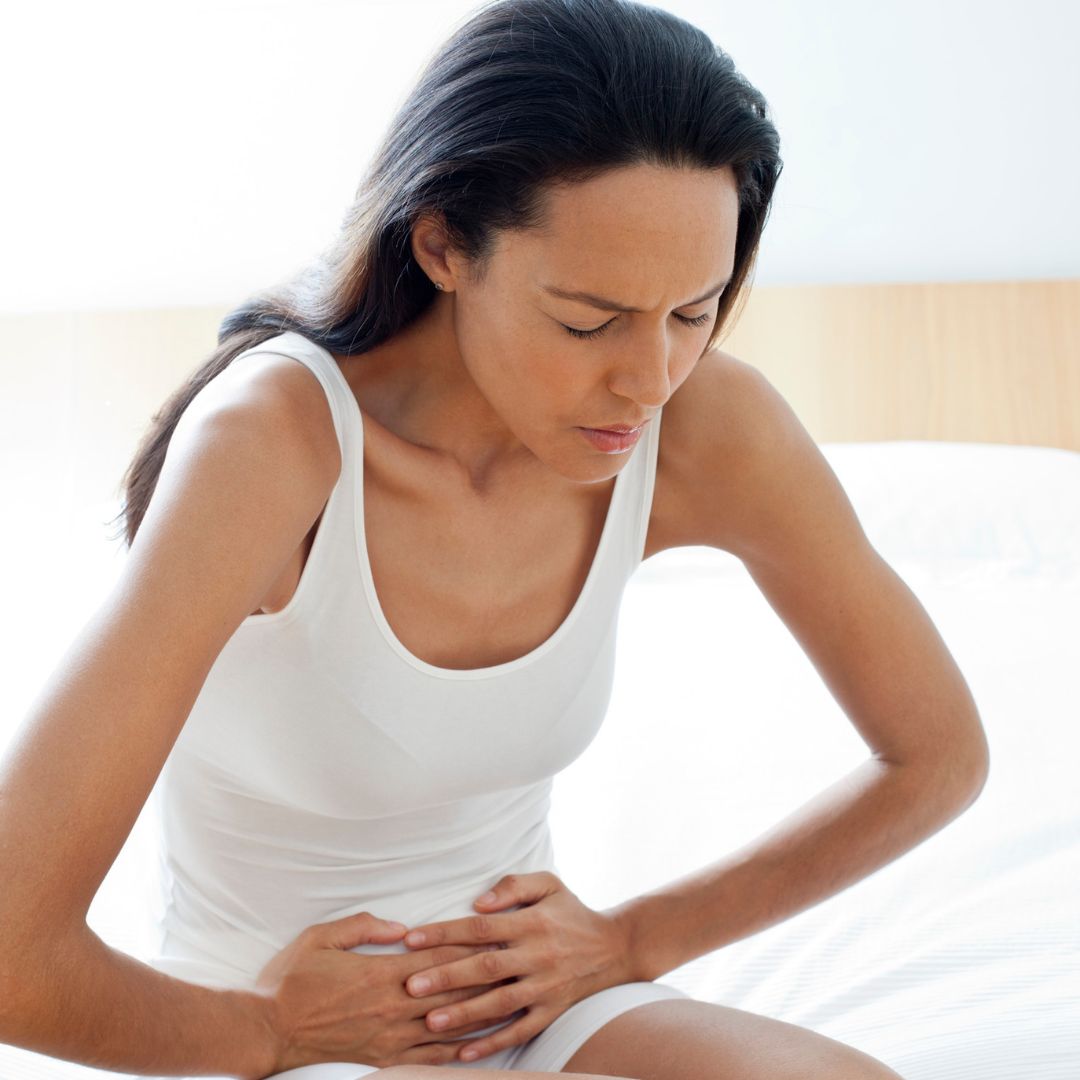




You wake up feeling fine. Your stomach is flat, your jeans fit, and for a moment you let yourself believe today might be a good day.
By mid-afternoon, the bloating has crept in. By dinner, you’re unbuttoning your waistband under the table and quietly calculating how far you are from the nearest bathroom.
If you live with IBS, you know that the symptoms are only half the problem. The other half is the unpredictability. You plan your mornings around it. You turn down invitations because of it.
You’ve learned which restaurants have a restroom close to the table, and you’ve probably noticed that some weeks are far worse than others, especially the days right before your period.
Maybe you’ve been told it’s IBS and to “manage your stress,” and that was the end of the conversation. Maybe you’ve cut out gluten, then dairy, then half the foods you used to enjoy, and the flares still find you.
Here’s what we want you to know first: you’re not imagining any of this, and it’s not “just nerves.” IBS flare-ups follow patterns, even when they feel completely random. Women in particular tend to experience IBS differently, for reasons that are only now getting the attention they deserve.
And once you understand what’s driving your flares, they start to feel a lot less like bad luck and a lot more like something you can work with.
Quick reference:
- What a flare-up is: a stretch of worse symptoms, such as cramping, bloating, diarrhea, constipation, or a mix of both.
- Common triggers: certain foods, stress, poor sleep, hormone shifts, a recent stomach bug, and some medications.
- Why women are affected differently: IBS is diagnosed more often in women, and symptoms often shift with the menstrual cycle.
- When to get checked promptly: bleeding, unexplained weight loss, symptoms that wake you at night, new symptoms after 50, or persistent bloating.
- The root-cause approach: finding what keeps setting off your flares, rather than only calming each one.
What an IBS Flare-Up Actually Feels Like
Part of what makes IBS so isolating is how hard it is to describe to someone who doesn’t have it.
It often starts with a dull, cramping ache low in your belly that eases a little after you go to the bathroom, then returns an hour later. The bloating builds through the day until your stomach feels tight and swollen. For some women, a flare means urgent, unpredictable trips to the bathroom. For others, it’s days of constipation and a heavy, uncomfortable fullness that won’t shift. And for many, it’s both, swinging from one to the other with no warning.
Doctors usually group IBS into types based on which pattern shows up most: IBS with constipation, IBS with diarrhea, or a mixed type that alternates between the two. To make a diagnosis, they look for belly pain that keeps coming back, on average at least one day a week over the past three months, connected to changes in how often you go or what your stools look like.
That clinical definition is useful. But it leaves out the parts you actually live with. The fatigue after a bad night. The mucus you’re too embarrassed to mention. The feeling that you never quite finished going. The low-level dread before every long drive, meeting, or dinner out.
All of that counts. It’s all part of the picture.
Why IBS Symptoms Look Different in Women
IBS is diagnosed more often in women than in men, by some estimates around twice as often. Researchers believe sex hormones are a big part of the reason.
Your gut is lined with receptors for estrogen and progesterone, and both hormones influence how quickly food moves through your digestive tract and how sensitive your gut nerves are to pain. As those hormones rise and fall across your cycle, your digestion rises and falls with them.
That’s why so many women notice a pattern once they start paying attention. Symptoms often worsen in the days before a period, as hormone levels drop, and can peak during menstruation itself, when they’re at their lowest. Bloating, cramping, and changes in bowel habits can all intensify. Women who have painful periods appear more likely to notice their IBS getting worse around that time too.
Life stages shift the picture again. Some women find their symptoms ease during pregnancy, while others deal with new constipation. Perimenopause, with its unpredictable hormone swings, can bring digestive changes that seem to come out of nowhere.
There’s another difference that’s harder to measure. Many women spend years being told their symptoms are stress, anxiety, or something they should simply learn to live with. Stress does play a role, and we’ll get to that. But being dismissed is not the same as being diagnosed, and a lot of women carry that frustration into every new appointment.
What Actually Sets Off a Flare
If your flares feel random, it’s often because more than one trigger is at work at the same time.
Food is the one most people suspect first, and for good reason. Certain carbohydrates, known as FODMAPs, ferment in the gut and pull in water, which can lead to gas, bloating, and changes in your stools. They’re found in everyday foods like onions, garlic, wheat, beans, some fruits, and dairy for people who don’t digest lactose well. Large meals, greasy food, alcohol, and caffeine can set things off too.
But food rarely acts alone. Picture a week where you’re sleeping badly, a deadline is looming, your period is two days away, and you grab a quick lunch you’d normally avoid. On its own, that lunch might have been fine. Stacked on top of everything else, it’s the thing that tips you into a flare.
Other common triggers include a recent course of antibiotics, a change in routine such as travel, and illness. Some women can trace the start of their IBS back to a specific bout of food poisoning or a stomach bug, after which their digestion never quite returned to normal.
Researchers call this post-infectious IBS, and it’s more common than many people realize.
Understanding your triggers is genuinely useful. But it raises a bigger question. Why is your gut so reactive to these things in the first place?
The Gut-Brain Connection Isn’t “All in Your Head”
Your gut has its own extensive network of nerves, and it’s in constant conversation with your brain. Signals travel in both directions. Stress can change how your gut moves and how much it hurts, and an irritated gut can send signals back that affect your mood, your sleep, and your energy. (Our guide to supplements for anxiety looks at this connection from the other side.)
In many people with IBS, the nerves in the gut become more sensitive than usual. A normal amount of gas that someone else wouldn’t notice can feel painful. Ordinary digestion can register as cramping. This isn’t imagined pain. It’s a real change in how your gut and brain process signals.
So when someone says your IBS is “just stress,” they’re half right and completely unhelpful. Stress is involved. But it’s one piece of a system that can be understood and supported, not a personal failing you need to fix with willpower.
Why Flares Keep Coming Back
Conventional care for IBS tends to focus on managing each flare. More fiber. Something to slow things down or speed things up. An antispasmodic for the cramping. Advice to reduce stress.
These can genuinely help, and for some women they’re enough.
But if you’ve been through all of that and you’re still planning your life around your gut, it usually means no one has asked the deeper question: what is making your gut this reactive?
That’s exactly where functional medicine starts. The answer looks different for different people.
For some, it’s an overgrowth of bacteria in the small intestine, known as SIBO, which research has linked to IBS in a meaningful share of patients. For others, it’s an imbalance in the gut microbiome after an infection or repeated antibiotics. Food sensitivities, ongoing stress, hormone imbalances, and nutrient gaps can all play a part, and long-standing digestive trouble can make it harder to absorb nutrients like vitamin D. (Our article on vitamin D and K2 explains why that matters.)
It’s also worth ruling out conditions that can look a lot like IBS. Celiac disease can cause very similar symptoms. Endometriosis can too, particularly when pain lines up closely with your cycle. Getting the right diagnosis matters, because it changes the plan entirely.
What Gets Uncovered When Someone Finally Looks Closer
The biggest difference often isn’t the treatment. It’s what gets discovered before treatment even begins.
At PrimeHealth, the first appointment is a detailed conversation about your story. When did your symptoms start? Was there a stomach bug, a stressful year, a round of antibiotics, or a pregnancy around that time? Do your flares follow your cycle? What have you already tried, and what happened? Your practitioner is listening for the patterns that a rushed visit tends to miss.
Testing then fills in what the conversation can’t. Depending on your history, that may include a closer look at your gut health and microbiome, breath testing for SIBO, screening for celiac disease, nutrient levels, and a review of your hormones.
Once you can see what’s driving your flares, the plan becomes specific. It might mean addressing an overgrowth, rebuilding your gut, adjusting your diet for a period of time, supporting your hormones, or calming an overactive stress response. Usually it’s a combination, built around your results rather than a generic handout. If you’re curious what that process feels like, here’s what actually happens at a functional medicine appointment.
Easing a Flare While You Look for Answers
Finding the root cause takes time, and you still have to get through the bad days. A few simple strategies help many women feel more comfortable in the meantime.
Warmth on your belly, from a heating pad or a warm bath, can ease cramping. A gentle walk after meals often helps more than lying still. Smaller, simpler meals put less strain on an irritated gut than one large one. Staying well hydrated matters, especially if diarrhea is part of your pattern. And keeping a simple record of your symptoms, meals, sleep, stress, and cycle for a few weeks can reveal patterns you’d never spot otherwise.
Some supplements also have research behind them for IBS symptoms, and we cover those in our guide to supplements for IBS. As with any supplement, which one makes sense depends on what’s driving your symptoms.
When Symptoms Deserve a Closer Look Right Away
IBS is common, but it shouldn’t be assumed. Please see a provider promptly if you notice any of the following:
- Blood in your stool, or black, tarry stools
- Weight loss you can’t explain
- Symptoms that wake you up at night
- Fever, persistent vomiting, or anemia
- New or changing bowel symptoms after age 50
- A family history of colon cancer, celiac disease, or inflammatory bowel disease
- Bloating that’s there most days for several weeks, especially alongside feeling full quickly or pelvic pain. These symptoms overlap with some gynecological conditions, including ovarian conditions, and deserve to be checked rather than written off as IBS.
None of this is meant to alarm you. Most of the time, these checks bring reassurance. They’re simply part of making sure you get the right answer.
Questions Women Ask About IBS Flare-Ups
How long does an IBS flare-up last?
It varies widely. Some flares settle within hours. Others last several days, or linger for weeks during a stressful stretch. If your flares are getting longer or more frequent, that’s a sign it’s worth looking deeper.
Why is my IBS worse before my period?
Estrogen and progesterone affect how your gut moves and how sensitive it is to pain. As both hormones drop in the days before your period, many women notice more bloating, cramping, and changes in bowel habits. Tracking your symptoms alongside your cycle can help confirm the pattern.
Can stress alone cause a flare?
Stress can definitely trigger flares, because your gut and brain are so closely connected. But it’s rarely the only factor. Stress tends to make a sensitive gut more reactive, so it’s worth understanding why your gut is sensitive in the first place.
Is IBS the same as IBD?
No. Inflammatory bowel disease, which includes Crohn’s disease and ulcerative colitis, causes visible inflammation and damage to the digestive tract. IBS doesn’t cause that kind of damage, though its symptoms can be just as disruptive. Because some symptoms overlap, it’s important to rule out IBD when symptoms are severe or include warning signs like bleeding or weight loss.
Your Body Isn’t Working Against You
It can feel that way. After years of bloating, cramping, and canceled plans, it’s easy to believe your gut is simply broken and that managing flare after flare is the best you can hope for.
But your symptoms are information. The timing of your flares, the foods that set them off, the way they shift with your cycle- all of it points somewhere. When someone takes the time to follow those clues, the answers often turn out to be more specific, and more fixable, than you were led to believe.
At PrimeHealth Denver, we start by listening to your whole story, then look for what’s actually driving your symptoms, so you can spend less time planning around your gut and more time living your life.
If you’ve spent years searching for answers without finding them, you don’t have to keep guessing. The first conversation is simply an opportunity to better understand what’s happening in your body, and whether a root-cause approach is the right next step for you. Book a free consultation and find out what’s behind your flares.